Below you can find details of the books I am currently pitching to English-language publishers. Please get in touch if you’d be interested in receiving a full sample and pitch for any of the following books…
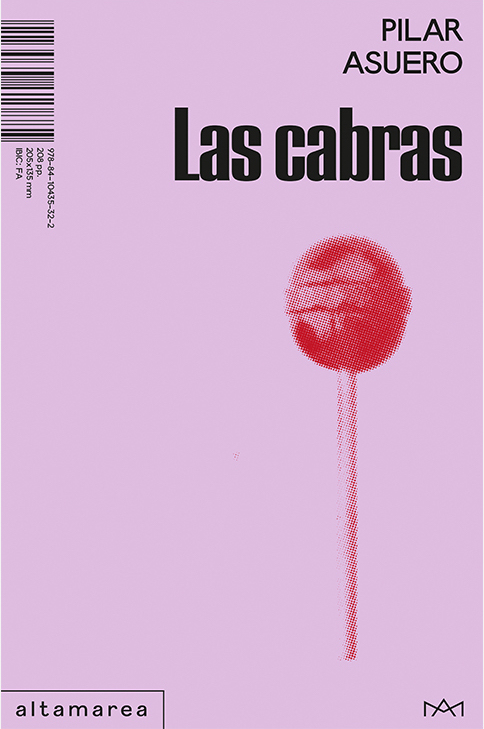
Las cabras, Pilar Asuero, Altamarea
Overview
Pilar Asuero’s debut novel, Las cabras, now in its sixth edition, follows the narrator, Cami, who at twenty-four years old moves from Santiago de Chile to Madrid in the hopes of establishing herself in the literary world and kickstarting her career as a writer. We follow Cami as she discovers a new city, battles loneliness, financial precarity, cultural differences, and the feeling of being an outsider, and considers friendship and how it can evolve over time.
Las cabras is a deeply introspective novel that is humorous yet emotional, and the prose feels fresh, modern and is very naturally playful. Not a “traditional” narrative with a typical structure, it is rather an exploration of a pivotal moment in one person’s life. In her first novel, Pilar Asuero offers a luminous and universal portrait of love, self-awareness, and emotional bonds, and explores themes such as linguistic contrast, the precariousness of striking out on one’s own in a hostile city, the sense of rootlessness that comes with leaving an entire life behind, and the urgent yet contradictory need to forge new bonds without renouncing the past – a past that returns with even greater force when we feel it is far away, or perhaps even on the brink of the abyss.
Las cabras is about what happens to friendship when the people involved choose to veer off the path they once shared in life and take different routes. It is about discovering that growing up means growing apart from people, changing, and sometimes losing the life you knew, but also discovering that love and friendship can survive distance and transformation. It is also a story of adapting to a new country, pursuing a dream, and changing without forgetting one’s place of origin, friendships, and where it all began.
Praise
‘A fantastic debut that’s not to be missed.’ – Nuria Azancot, El cultural
‘A great novel that stands out for its intimate reflection on emigration and on the growing and painful disconnect from those who love us.’ – Juan Marqués, El mundol
Named one of the best literary debuts of 2025 by Esquire
The author
Pilar Asuero is a writer, editor, and co-founder of the literary outreach project La Elocuente. She completed a Master’s degree in Creative Writing at the Complutense University of Madrid and a Master’s degree in Publishing at the Autonomous University of Madrid. She was a resident on the 22nd cohort of the Antonio Gala Foundation for young creators. Las cabras is her first novel.
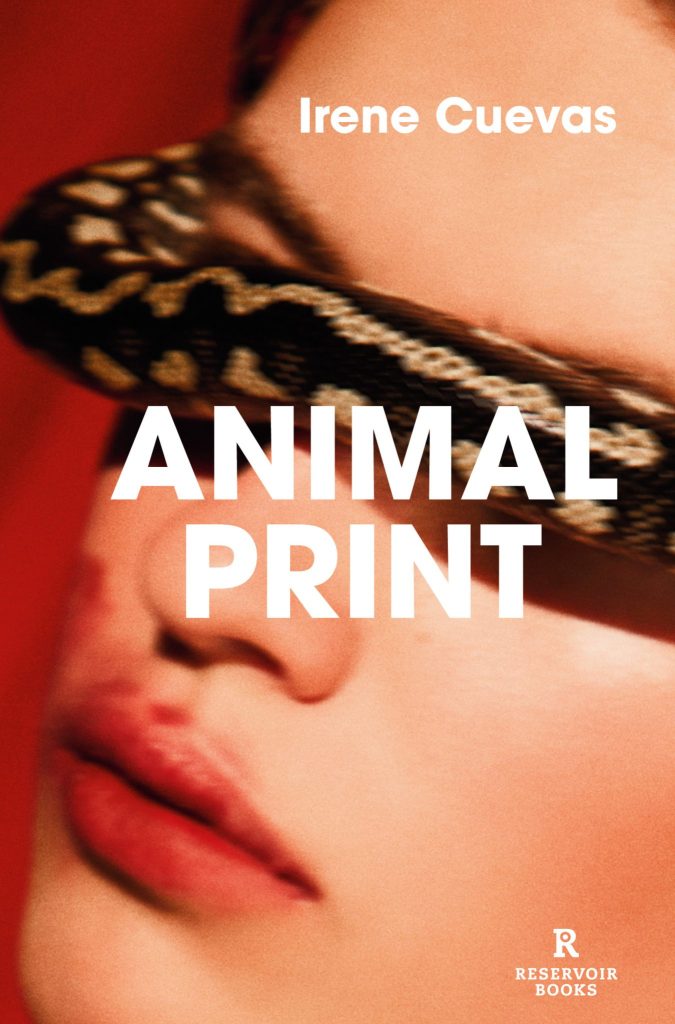
Animal Print, Irene Cuevas, Reservoir Books
Overview
Animal Print is a collection of seven interconnected contemporary fable-like tales written in a modern, magical-realist style about people who feel trapped by society’s expectations and gradually reveal their more instinctive, “animal” selves. Through images of leopards, snakes, lions, bears and other animals, Irene Cuevas explores identity, desire, sexuality, violence, motherhood, and
Each of the short stories, written in sharp, acerbic prose, use animals and transformation as a way of exploring experiences of being different — in particular queer adolescence and young adulthood.
Animal Print is a stunning collection in which the wild and the human swap masks. Cuevas writes as if she is caressing you with one hand and scratching you with the other, with a prose that is fierce yet delicate, lyrical yet sharp. She transforms each tale into a distorting mirror where, beneath each skin, another animal lies in wait, biding its time to reveal itself.
Praise
‘The narrative structure breaks from convention, bringing a refreshing new perspective that is accompanied by understated yet deeply meaningful prose that draws the reader in.’ – Angélica Ramos, El generacional
‘Irene’s prose is tender and ghostly, dual-edged, cutting straight to the core of desire.’ – Mercedes Duque Espiau
‘A fierce, brilliant, and deeply addictive piece of writing’ – Ángelo Néstore
The author
Irene Cuevas holds a law degree from the Universidad Complutense de Madrid. For five years, she took classes in short story and novel writing at the Escuela de Escritores with various instructors, and in 2021 she completed a master’s degree in narrative fiction. Un momento de ternura y de piedad, her first novel, was published in 2024 by Reservoir Books and her latest short story collection, Animal Print, was also published by Reservoir Books in 2026.
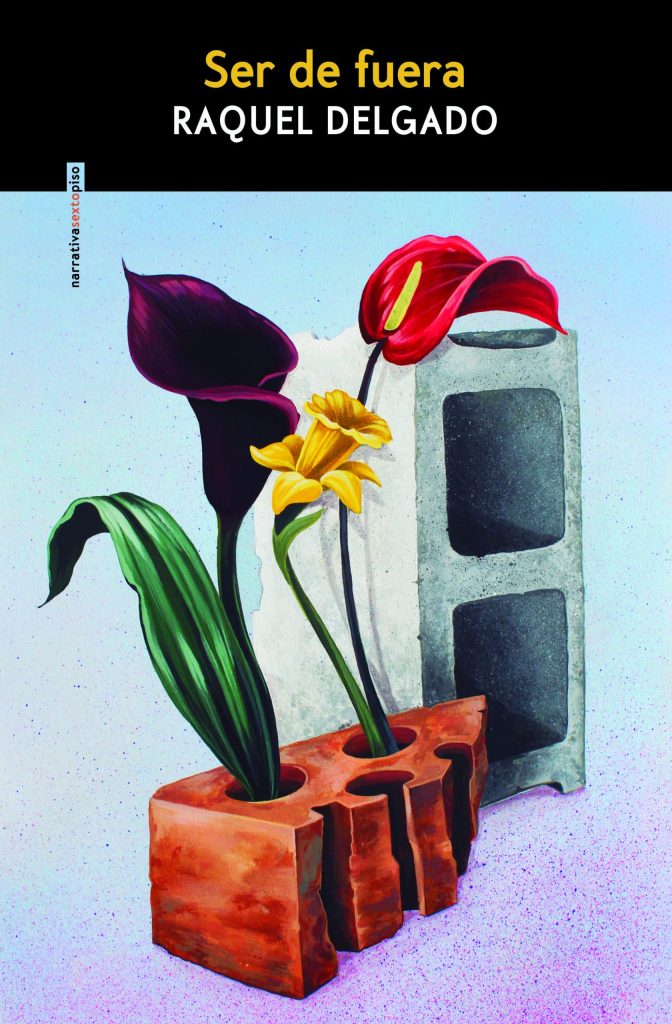
From Elsewhere, Raquel Delgado, Sexto Piso
Overview
From Elsewhere is Raquel Delgado’s debut publication, a collection of nine stories that all centre around women who, at different points in their lives, feel displaced, either in a physical sense, emotionally, or in terms of their identity. With her singular perspective, Delgado traces and dissects the key places of our sentimental education and does so with a meticulous prose to create a collective gaze into a private realm that reveals who we are and what we are thinking when no one is looking.
The narrative voice is delicate yet unafraid of critical insight, turning the mundane into something emotionally resonant and layered. With this concise and delicate style, and an implacable gaze that does not, however, renounce compassion, the stories in From Elsewhere reflect on nostalgia, on who and what we leave behind, on what happens when people and things change so much they become unrecognisable, on the gap between who we were and who we are, and on the dissonance that often comes with personal evolution – especially when one moves between environments.
Delgado perfectly captures life’s small, shared moments – nostalgia, awkwardness, longing, subtle tensions – with a poetic simplicity. Through everyday situations and a restrained yet emotionally rich style, Raquel Delgado delivers a powerful literary debut. The book has resonated deeply with readers and critics for its intimate, human perspective.
Praise
‘Every so often, new voices burst onto the Spanish literary scene, but not all of them with as much potential as that of Raquel Delgado.’ – Eva Blanco Medina, Vogue Spain
‘A debut that astonishes for its capacity to move with unusual clarity and restraint.’ – Julia Olmo, ABC Cultural
‘From Elsewhere is an agile, poetic and sincere narrative debut by Raquel Delgado.’ – Elena Costa, El Español
‘Everyday situations are narrated with astonishing mastery.’ – Juan Marqués, El Mundo
The author
Raquel Delgado was born in Valladolid in 1988. She has a degree in Journalism and Audio-Visual Communications and a Masters in Political and Corporate Communications. She grew up in Vitoria and currently lives in A Coruña. From Elsewhere is her first book.
Read an excerpt here.
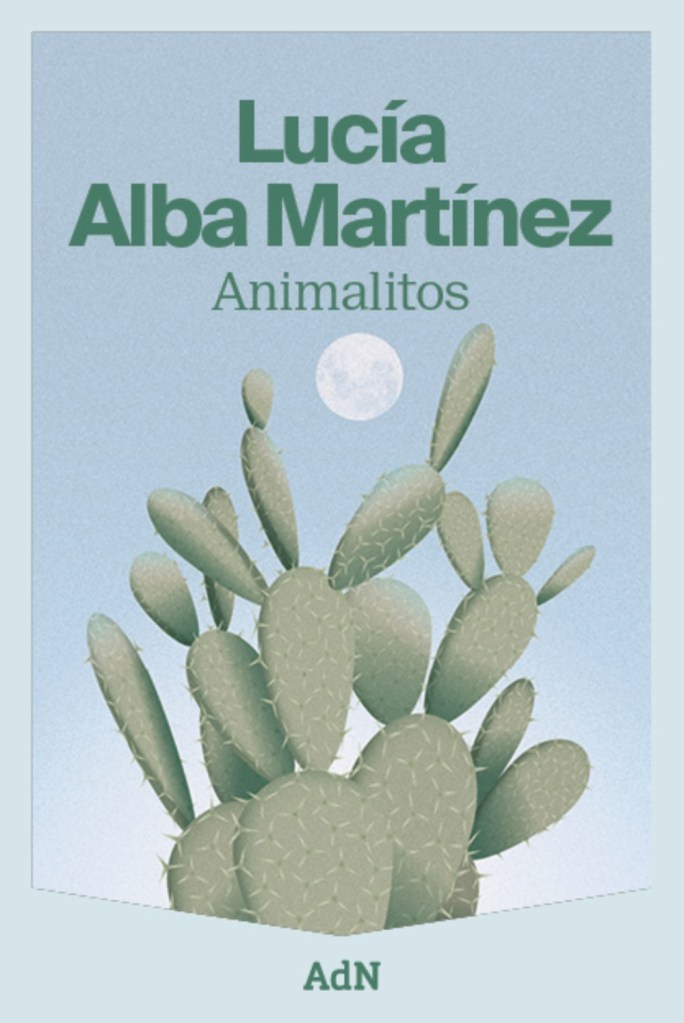
Little Animals, Lucía Alba Martínez, AdN
Overview
Little Animals is an intimate and deeply reflective novel made up of vignettes with a common thread: the emotions, dreams, nightmares, and spiralling thoughts of Inés, the narrator. In these brief, yet incredibly intricate reflections on her life (from childhood to the present day) readers are allowed a glimpse into Inés’ troubled mind as she tries her best to understand life and get through each day in what she considers a complex and insecure world.
This book is an ode to childhood, it is a brutal reflection of the harshness of adult life and the human capacity to overcome even the most difficult situations. Martínez has created a novel with a balance between rawness and tenderness, between light and darkness, with touches of irony and humour that, despite the somewhat sombre themes found within the novel, offers readers endearing moments of hope. With her first novel, Lucía Alba Martínez presents herself as one of the most different and interesting voices on the Spanish scene.
Praise
‘Perhaps one of the greatest joys of the veteran writer is to discover talented young people to whom he can hand over the torch of literature before it falls out of his hands. Lucía Alba Martínez is one of these young authors […] who between bewilderment and unwavering commitment, has written Little Animals.’ – Juan Manuel de Prada, La voz de Galicia
‘Lucía Alba Martínez offers a novel full of tenderness and humour in Little Animals.’ – Briseida Zenobia, Todo Literatura; Républica Ibérica de las Letras
Book of the week in El Periódico de España: ‘In Little Animals, Lucía Alba Martínez’s debut novel, the author takes us into dreams and memory, to the fine line between the past and present, to talk about rootedness and rootlessness, love and lovelessness, protection and helplessness. She does so through the voice of Inés who shows her world without qualms.’ – El Periódico de España
The author
Lucía Alba Martínez is a writer and translator. She spent most of her childhood and adolescence living in Tunisia. She studied Literature and Comparative Literature at the Universidad Complutense de Madrid and translates literature from English, French and Italian into Spanish. She has published articles on literature in Quimera and CTXT. Little Animals is her first novel.
Read an excerpt here.
Listen to a reading from my translation here.

Look at Her, Cristina Araújo Gámir, Tusquets
Overview
Look At Her is a dazzling, addictive, and necessary novel about a dramatic experience at the end of a girl’s adolescence. This debut is a harrowing and honest read that tells the story of Miriam, a young girl who, as well as having to deal with the struggles typical of all adolescents, is the victim of a sexual assault in the summer before her last year of high school. Araújo Gámir writes with careful, well-considered detail about the events before, during, and most significantly after this event, and confronts uncomfortable but necessary themes such as victim blaming, sexism, and toxic masculinity. Most importantly though, she gives space to Miriam’s voice, and we follow her as she attempts to come to terms with the horrific event that will change her life forever. This incredibly important novel won Araújo Gámir the XVIII Premio Tusquets in 2022.
Awards
Winner of the XVIII PREMIO TUSQUETS EDITORES DE NOVELA 2022
Awarded the BEST DEBUT NOVEL at the Festival du Premier Roman (France)
Praise
‘A novel of great psychological depth, that is precise, excellently constructed. It dissects, with fine intelligence, the intricacies of patriarchal thinking, which it dares to look at head-on in all its complexity.’ – Sara Mesa
‘Exceptional as a first novel, and just plain exceptional… for the quality of its prose, the clearly thought-out structure of the tale, the analytic distance, the emotional empathy devoted to understanding a human tragedy… A hypersensitive novelist, intelligent, wise, compassionate. A major novel whose corrosiveness lies in its discovery of the perfect degree of distance. A powerful literary mind. A great story.’ – Jordi Gracia, El País
‘A sharp novel that lifts the scab and looks at the wound beneath it.’ – Marta Barrio
‘With Look At Her not only do we discover a new voice, that of Cristina Araújo, but also an instant classic of the contemporary novel of our country.’ – Beatriz Martínez, El Periódico
‘It is impossible to finish this novel without feeling indignation and rage. This book shakes you and hits you at your core.’ – Eva Cosculluela
The author
Cristina Araújo Gámir has a degree in English Philology from the Complutense University in Madrid. After finishing her degree, she worked in a dubbing studio reviewing translations of documentaries for National Geographic, Discovery Channel, and the BBC. Since 2011 she has lived in Frankfurt, where she wrote her first novel, Mira a esa chica, winner of the XVIII Tusquets Editores Award.
Read an excerpt here.
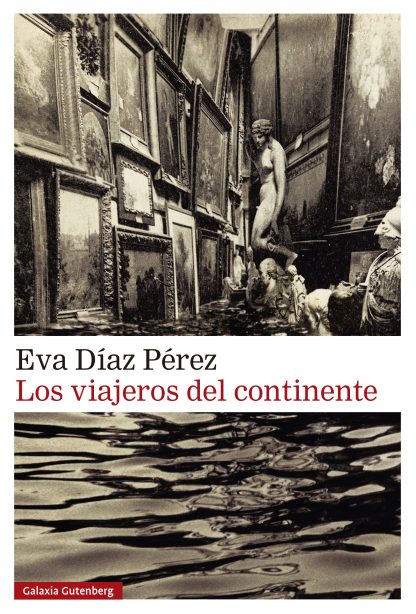
Travellers of the Continent, Eva Díaz Pérez, Galaxia Gutenberg
Overview
Hugh de Galard, a former travel writer, embarks on a journey through Europe, a voyage that he knows will be the last he ever takes. We follow Hugh as he sets off with his wife, Violet Archer, and recalls his life in London as they cross a continent that seems to idle in uncertainty. On boats, trains, cars, walks and flâneries they discover the metaphor of a Europe in the premature ruins of old seaside resorts, forgotten train stations, abandoned water parks and closed cemeteries. They are on a journey in search of European memory and a refuge from what is about to disappear. Travellers of the Continent is a novel about life, dignified death, Europe, and the lines that often blur between memories, reality and dreams. In this excerpt Hugh and Violet’s train breaks down, and they are forced to stop in an abandoned train station in the middle of the French countryside …
Praise
‘Díaz Pérez has created a powerful and unforgettable metaphor for what is, or perhaps was, the European dream.’ – Andrés Ibáñez, ABC Cultural
‘This is a melancholic, beautiful, intelligent and very well written novel. It is one of those rare books that cannot be categorised. It is not exactly a novel, nor a travelogue, nor is it an essay, but rather it moves among these genres….’ – Andrés Ibáñez, ABC Cultural
The author
Eva Díaz Pérez is a writer and journalist from Seville. She has published more than fifteen books, including the novels Memorias de ceniza (Unamuno Prize), El club de la memoria (finalist for the Nadal Prize), Adriático (Málaga Prize 2013 and Andalusia Critics’ Prize 2014) and the essays La andalucía del exilio and Rutas del exilio español en Londres, among others. She is a member of the Real Academia Sevillana de Buenas Letras and the Real Academia Hispanoamericana de Ciencias, Letras y Artes from Cádiz. She has been director of the Centro Andaluz de las Letras. She collaborates with ABC and El País. Los viajeros del cotinente is her latest novel.
Read an excerpt here.

Everything Will Get Better, Almudena Grandes, Tusquets
Overview
Everything Will Get Better is Almudena Grandes’ (Madrid, 1960 – 2021) last novel, and was published posthumously in 2022. This brilliant dystopian saga is set in Spain in the near future and features a kaleidoscope of characters all dealing with their new reality: a ‘perfect’ world of mandatory happiness, where denouncing this lie can cost you your life. After years of pandemics, El Gran Capitán’s new political party, Citizen’s Movement, Solutions Now!, wins the elections in a clean sweep. Directing the party from the shadows, El Capitán (Juan Francisco Martínez Sarmiento), a successful businessman, is helped by his trusty advisor, Megan García, and his Council of Ministers, or as he likes to call them ‘Board of Directors’. El Capitán has ambitious projects to fix the country and turn politics completely on its head.
Everything Will Get Better is a choral novel that follows the stories of several ordinary citizens who dare to dismantle the lies of the new regime under which everything appears to be improving, when in reality they live under the abuse of unscrupulous, powerful people. Flitting between different points of views from chapter to chapter, we read of the measures and risks that these people are taking in order to get to the bottom of what lies behind a rose-tinted government. In between these voices from all walks of life, we also see things from El Capitán’s and his advisors’ points of view as they pull the strings that control an entire country and its people. The result is an unsettling dystopia that is scarily close to home, and as is true to Almudena Grandes’ oeuvre, offers important social commentaries on politics, capitalism, and ideas of freedom. Everything Will Get Better is the legacy of a great storyteller who once again manages to move us and raise awareness.
Awards and recognitions
Winner of the Premio Nacional Narrativa in 2018
Winner of the Premio Julián Besteiro de las Artes y de las Letras in 2002 for her body of work
Winner of the Premio Liber in 2018 for the most outstanding Hispanic author, awarded by the Publishers Guild
The Gold Medal of Merit in the Fine Arts, awarded posthumously
Everything Will Get Better named among the best books of 2022 in El País, La Vanguardia and The Objective
Praise
‘One of Spain’s leading writers, she reveals herself as a powerfully perceptive writer who understands the subtleties of human nature… this is a hugely intelligent, wise novel. It also tells a gripping story, that, as the characters’ lives are gradually revealed, balances on the keen edge of danger.’ – Sunday Telegraph
‘Grandes is a powerful writer, a wonderful director of actors, lavish in emotions, who has managed to write yet another enjoyable and moving book.’ – Qué Leer
‘Grandes’ prose is impeccable. The reader will fully enjoy the author’s mastery of language and the smooth creation and development of scenes.’ – La Razón
‘The writer’s posthumous novel reveals her strong moral ambition and her determination to denounce injustice and inequalities.’ – Germán Gullón, El Español
The author
Almudena Grandes (Madrid, 1960-2021) became known in 1989 with Las edades de Lulú, winner of the XI La Sonrisa Vertical Award. Her novels Te llamaré Viernes, Atlas de geografía humana, Castillos de cartón, and El corazón helado have made her one of the most important and cherished novelists in contemporary Spain. The five novels that make up her series Episodios de una Guerra Interminable have been widely adapted to cinema and theatre, and the series was awarded several prizes. Her death in November 2021 caused a deep impact and provoked an exciting collective response of tribute and recognition, from thousands of her readers and colleagues.
Read an excerpt here.

