Here you can find a selection of my published work, including full-length novel translations, excerpts and short stories published in anthologies and online magazines, and features and reviews published in print and online magazines…
FORTHCOMING TRANSLATION…
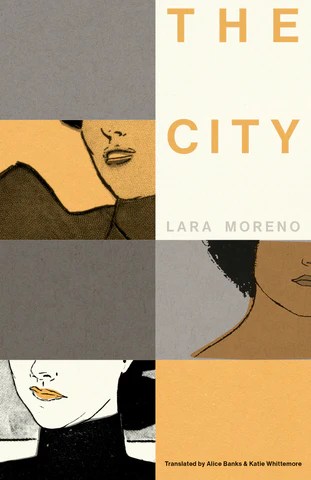
The City, by Lara Moreno, translated by Alice Banks & Katie Whittemore
In The City, acclaimed Spanish author Lara Moreno weaves a compelling tapestry of intersecting lives in contemporary Madrid. Through the stories of three women – Oliva, navigating an abusive relationship; Damaris, a Colombian immigrant juggling motherhood and economic disparity; and Horía, a Moroccan woman seeking stability while living in the margins – Moreno crafts a vivid portrait of personal and societal struggle.
With unflinching prose, The City delves into themes of love, resilience, and survival in an urban landscape shaped by inequality and cultural division. Through its intimate storytelling and sharp social observation, Moreno’s novel offers a fresh and poignant exploration of what it means to belong in an ever-changing city.
NOVEL…
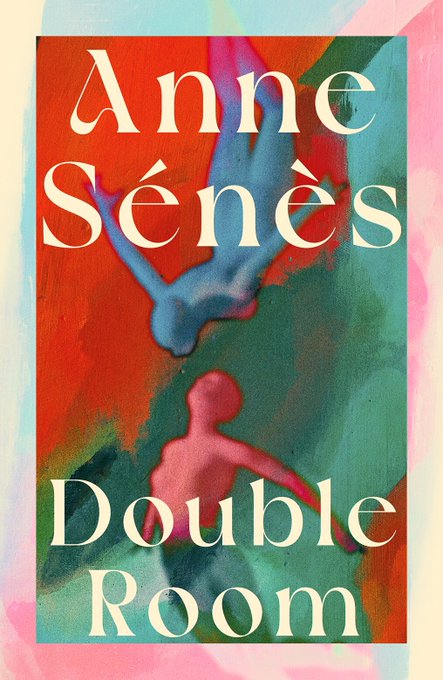
Double Room, by Anne Sénès, translated by Alice Banks
London, late 1990s. Stan, a young and promising French composer, is invited to arrange the music for a theatrical adaptation of The Picture of Dorian Gray. The play will never be staged, but Stan meets Liv, the love of his life, and their harmonious duo soon becomes a trio with the birth of their beloved daughter, Lisa. Stan’s world is filled with vibrant colour and melodic music, and under his wife and daughter’s gaze, his piano comes to life.
Paris, today. After Liv’s fatal accident, Stan returns to France surrounded by darkness, no longer able to compose, and living in the Rabbit Hole a home left to him by an aunt. He shares his life with Babette, a lifeguard and mother of a boy of Lisa’s age, and Laïvely, an AI machine of his own invention endowed with Liv’s voice, that he spent entire nights building after her death.
But Stan remains haunted by his past. As the silence gradually gives way to noises, sometimes even a burst of laughter, and Laïvely seems to take on a life of its own, memories and reality fade and blur … and Stan’s new family implodes…
Read more about the novel in The Bookseller.
‘A book that will haunt you with what is said and what is left unsaid … simply brilliant’ – Jill Johnson
‘Every page contains a mystery, a twist, a doubt. We don’t follow the characters, we travel alongside them, turning the pages in an ever-increasing frenzy.’ – Jean-Paul Delfino
‘Told in an achingly beautiful voice, Double Room drew me into a world full of mystery, music and bittersweet love. Every sentence is poetic, every page is captivating. I could picture, taste and smell every scene…’ – Katie Allen
‘A beautiful, heartfelt and sensual story, written with style and grace.’ – Doug Johnstone
‘This spellbinding novel takes readers on a multi-sensory journey through love and loss, grief, frustration and lust … One of my favourite reads of the year.’ – Gill Paul
‘Enchanting, beautiful, poetic … evokes the most indescribable feelings.’ – Babelio
‘Spellbinding, disconcerting and hypnotic … an amalgamation of Shakespearean tragedy, the spirit of Lewis Carroll and the vivid descriptions of Wuthering Heights.’ – Aurélie Dye-Pellisson
‘Double Room is a beguiling tale of happiness, acceptance, love and grief that will sweep you away with its exquisite prose.’ – Books By Bindu
‘Melodic, haunting, achingly beautiful, sensual and heart-wrenching, Double Room is like nothing I’ve ever read before. Anne Sénès has a style that is all her own; a lyrical and moving prose that is enthralling.’ – Biblio Treasures
Read the full review here.
‘Double Room by Anne Sénès, translated into English from French by Alice Banks for Orenda Books, sounds like a ballet aire and reads like an impressionist painting. For a very long time I haven’t had the occasion of breathing so many different impressions while reading.’ – Wild Writing Life
Read the the review here.
‘Anne Sénès’ writing is exciting and surprising, Alice Banks’ translation captures all the fragility and musicality of this splendid work.’ – Mary Picken
Read the full review here.
SHORT STORY…
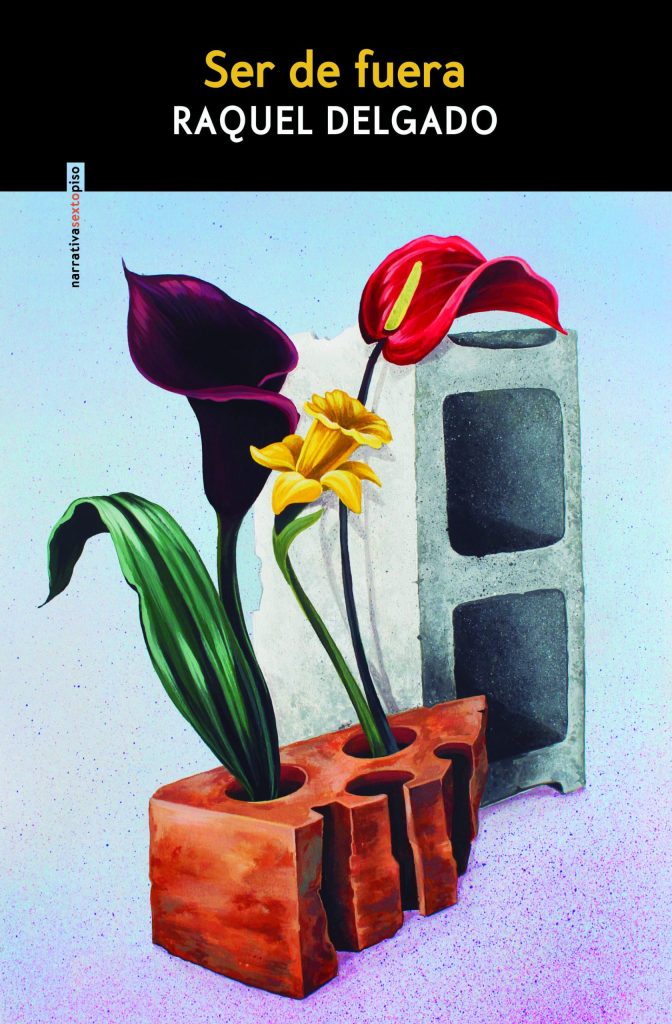
Sourdough loaf, no additives or preservatives; German bread, with malt, rye, whole wheat, walnuts, oats, sunflower and pumpkin seeds; stone-ground flour or active-charcoal roll, slow fermented. Bread that respects tradition, honest bread. In front of me, shelves packed with warm loaves, and surrounding me, enveloping me, the warmth from several industrial ovens. In this new, expensive, luxurious bakery that Guillermo has sent me to, so different to those of my childhood, I don’t order a thing, nor can I even decide what I would like, all because an old reproach, the one you would tell me about bread, is starting to impregnate the moist crumbs and mix with the sweetness of the air…
“Left to your own devices, you’d be capable of eating without bread.”
The daily loaf, the bread for the table, the basic component of every well-executed household. The daily loaf, the bread for the table, the dignity of living without feeling like an animal…
Read the full story here.
I am currently seeking a publisher to work with on the translation of the complete collection, please contact me on alicebankstranslator@gmail.com for more info.
EXCERPT…
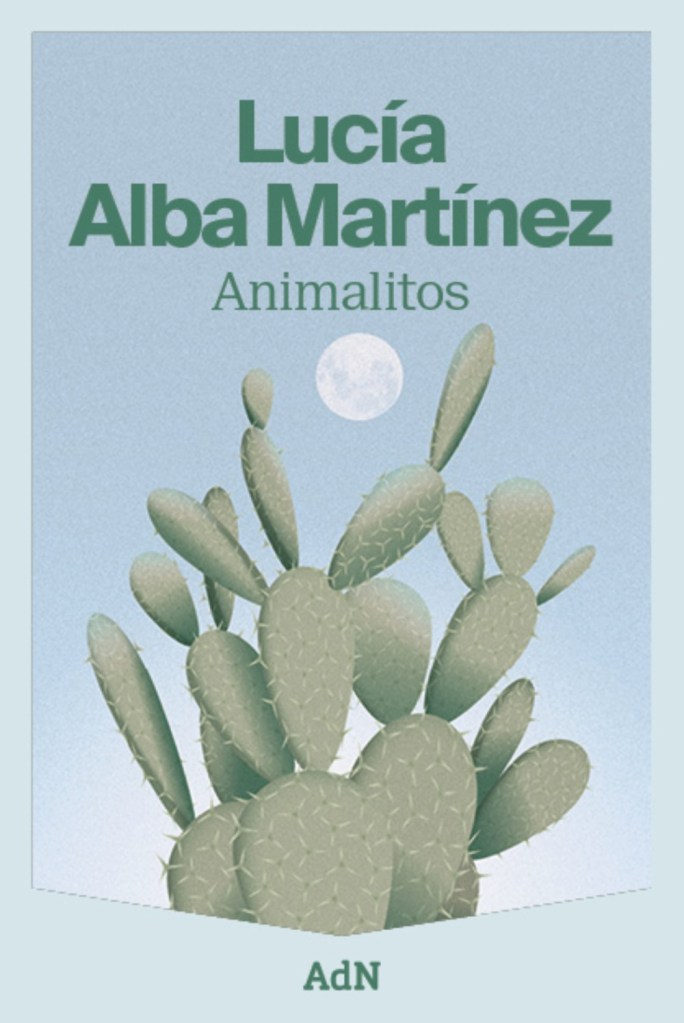
Translation of excerpts from Lucía Alba Martínez’s Animalitos in the Los Angeles Review
I dream of beautiful skies riddled with horrible stars, stunning black skies in which stars that frighten me appear. I dream I am looking up at skies I know, where suddenly, I discover starts I do not. I dream of asteroids that threaten to fall, and then do so, close by, although not close enough to wake me up; they fall and they explode without touching me, they don’t hurt me, but they burn and destroy everything that surrounds me. I wake up late, but still exhausted, and I look, as I do every morning, at my skinny, naked body in the mirror on the wardrobe and feel ashamed. I find refuge in a pair of pyjama bottoms that are too big for me and an old, worn-out jumper that I take from the top of the mountain of clothes that are on the floor. Yesterday I marinated some ribs, and I should have woken up earlier, they need a long time in the oven, and I realise that I also need to put foil on the bottom of the tray and there’s none left, so I go down to the corner-shop in my pyjamas and slippers and the light of the May morning is so bright it hurts. And the woman that serves me asks, no work today? And I reply, no, today no, and she asks, tomorrow? And I tell her, yes, tomorrow yes. And it’s a lie, and I leave the shop crying with the roll of tinfoil under my arm…
Read the full selection of excerpts here.
I am currently seeking a publisher to work with on the translation of the complete novela, please contact me on alicebankstranslator@gmail.com for more info..
EXCERPT…
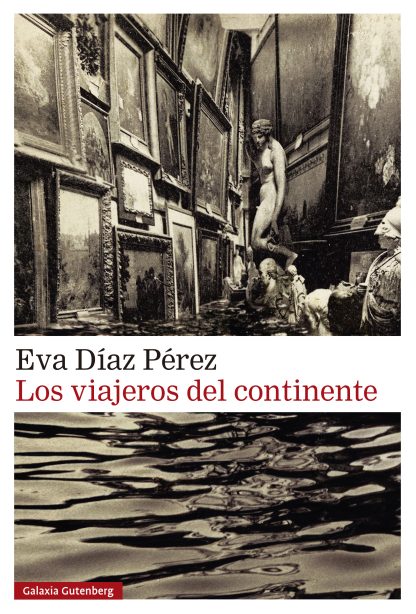
The train stops due to a breakdown a little before arriving in Auvers-sur-Oise, about thirty kilometres from Paris. Over the speakers they announce that until a machine arrives via a secondary track, they will not be able to resume the journey. They recommend passengers disembark the train and have something to eat in the small restaurant that despite being attached to the old railway station, is still hanging on. Violet and Hugh get off the train, but they don’t go to the restaurant like the rest of the passengers, instead they decide to walk along the abandoned station’s platform to nose around and pass the time. As they move away, they leave behind the hustle and bustle of the other passengers, displeased at the interruption to their journey, and the sound of traffic coming from the nearby road that forms part of a well-used route for lorries travelling from the Normandy coast to the capital. However, the old station seems frozen in another time, it’s a no-man’s land floating in the nothingness, a space that no longer is, yet at the same time has not ceased to exist. They feel overcome by the same sensation they had during their visit to the spa in Honfleur, that of passing among ghosts through a place in ruins, a place long forgotten, a scene through which people who do not want to leave everything behind still wander, a landscape of the past, the interval between an origin and a destination. A pause. An interruption in the middle of life…
Read the full selection of excerpts here.
I am currently seeking a publisher to work with on the translation of the complete novel, please contact me on alicebankstranslator@gmail.com for more info..
SHORT STORY…
The story begins the moment the Mother tells the Grandmother that there is going to be a baby: the Baby.
Lie: the story began a few months earlier, when the Mother found out that there was going to be a baby and kept her mouth shut as she waited for the pregnancy to advance. That was the beginning of all beginnings, a story as old as time, well known by mothers from all over the world. No, that is also not true, or not entirely. To be precise – we will try to be precise narrators – the story would have begun even earlier, with the Mother feeling curious about being a mother for the very first time; with the Grandmother considering far too often the possibilities of her becoming a grandmother, because, as the Mother has recently learned from one of the most famous child psychoanalysts around: ‘babies start existing as soon as they are dreamt of.’
Now this knowledge has been shared with the Grandmother, the Mother understands that the Baby, the surprisingly mobile grape that she and the Father saw just a few days ago on the ultrasound screen, will never again be only hers…
Read the full story here.
I am currently seeking a publisher to work with on the translation of the complete collection, please contact me on alicebankstranslator@gmail.com for more info.
NOVEL…
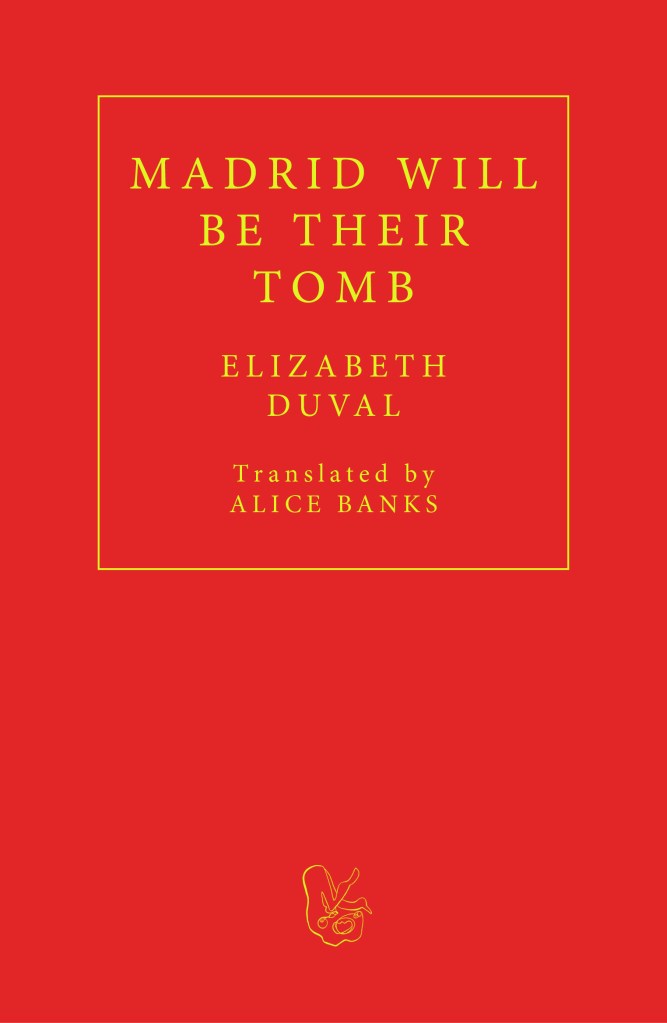
Madrid Will be Their Tomb, by Elizabeth Duval, translated by Alice Banks, Fum d’Estampa Press
Two occupied buildings: one the former headquarters of the NO-DO (a Francoist propaganda outlet) that has been taken over by a small group of fascists, the other the ruins of some abandoned film studios that have been converted into the barracks of a Marxist-Leninist cell. Drifting between these two spaces are Santiago and Ramiro; two characters who cross paths and change each other’s lives. Discursive and devastating, Duval’s first novel is imbued with the same traits as the era she portrays. A sad, passionate, and all too real portrait of an ever more divided world, Duval’s story, in her powerful, shocking, yet considered prose, reminds us of the uncomfortable, but somewhat comforting similarities we may find with the “enemy”.
‘What I tell here, after all, is a rather small story of love and violence, comments Elizabeth Duval in the author’s note to her scorching, exhilarating Madrid Will Be Their Tomb (fluently translated by Alice Banks), a novel of deep political and philosophical engagement, indelible imagery and great energy.’ – Catherine Taylor, The Irish Times
Selected for the Irish Times’ Best Fiction in Translation of 2023
‘Duval narrates disorder and subversion with a writing that is sometimes contained, sometimes runaway, sometimes ironic and sometimes poetic. Modest and powerfully beautiful, this is writing that illuminates human mystery and lifts the reader into the air, leaving them on an edge where their convictions tremble and shake.’ – Juan Manuel de Prada, ABC
‘A marvellous novel.’ – Nadal Suau, El Español
EXCERPT…
Jonás González Vergara was ready to face his therapist.
Before receiving the message with the date and the time of his appointment on his 7AP mobile, bought expressly for the occasion, he’d removed all the quilts, bed sheets and towels that were stored in the chest beneath his bed. Here he had been keeping – almost carelessly – what were about to become his two illegal laptops, a pair of external hard drives, three screens, two old smartphones, the phone he’d been using up until the Great Blackout, speakers, computer mice, and other gadgets that at first glance no longer served a purpose. He covered them back up with two quilts before lowering the bed, onto which he threw a mountain of clothes. Then he took what he’d removed from his stash – what was to be discarded – to the hall: a smartphone whose screen was in pieces, a printer that hadn’t worked for ten years, a mouse, two disassembled speakers, and Lucía’s laptop – this particularly annoyed him because it was brand new and no one had had the chance to turn it on since he’d brought it back from the store, neatly wrapped, but it wasn’t plausible that a man like him would not have a laptop, and the ones he had kept hidden were better…
Read the full excerpt here.
I am currently seeking a publisher to work with on the translation of the complete novel, please contact me on alicebankstranslator@gmail.com for more info.
Longer sample and further translations of Grandes’ oeuvre available.


EXCERPT…
[…]The slice of sky beyond the square clears into an indecisive mauve. There’s almost no one on the street, and those passing don’t even want to look at you. Some are still partying. They giggle and stumble over one another as they embrace, bellowing indecipherable songs. The homeless are more discreet, their drunkenness shifts them with dragged feet. Further away within the fragments of the shadows, a man turns the corner. He walks along the line of trees alone, his motor functions are intact. His back is stiff, trim, measured, like a bishop. He carries a newspaper rolled up beneath his arm, his hands are buried in his pockets. They’re easy to spot, those who have already crossed over into the realm of today, while you gasp in the gloom, languishing in the fuzzy edges of last night. A few metres behind the man is a poodle. It stops to pee on the leg of a bench and afterwards it makes its way over to you. Its paws scratch along the paving stones. You think you can reach out your arm to stroke it, but no, you can’t do that either, so more tears come, a sob or some sort of hiccup, you just want the dog to stay. And then a whistle, come here. The bishop man. He definitely thinks you’re hungover, or on something. Maybe you stink of sex. Definitely. You notice your wet underwear. They’ll use that detail later…
Read the full excerpt here.
I am currently seeking a publisher to work with on the translation of the complete novel, please contact me on alicebankstranslator@gmail.com for more info.
FEATURE ARTICLES…
Assistant editor of The Spanish Riveter and contributor of several articles…
Highlighting the Indies An overview of Spanish literature in translation published by UK and US independent publishers.
Grants, grants, grants: Translating and Promoting Spain’s Literature in English An informative article about the grants available for funding translation costs and promotional activity for books translated from Basque, Catalan, Galician and Spanish.
Translation of the Postcard from Galicia, by Inma López Silva
Read the articles, and the magazine in full here.
NOVEL…
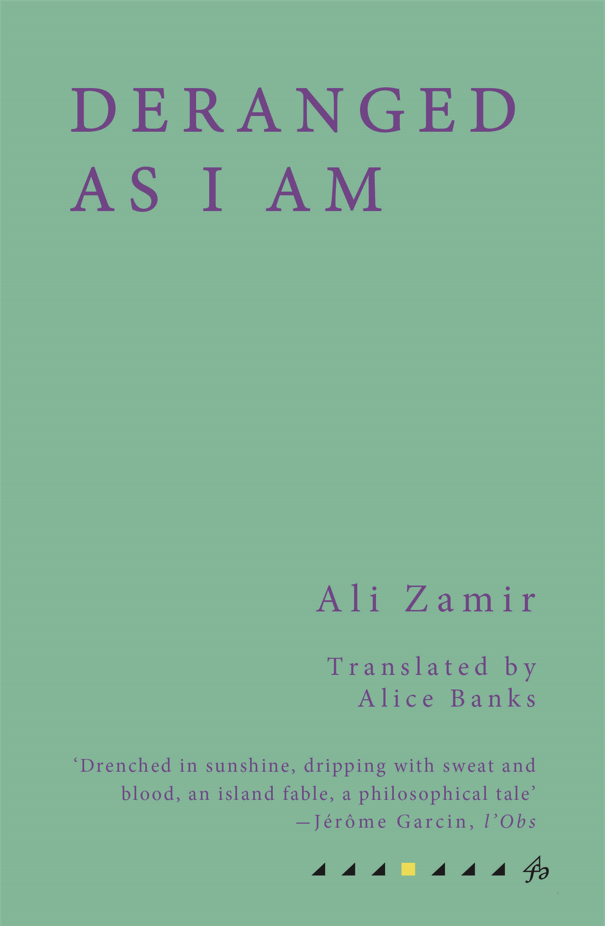
Deranged As I Am, by Ali Zamir, translated by Alice Banks, Fum d’Estampa Press
Set on the island of Anjouan, Comoros, Deranged As I Am tells the story of a humble docker. With his ramshackle cart and patched-up clothes, he spends his days trying to find enough work to feed himself. This whirlwind of a novel takes place over just a few days, yet Zamir’s poetic and energetic prose transports us to the docks, its noises, colours, and smells, and the dynamism of his language along with his powerful mix of genres, and the cleverness of his verbal invention perfectly serve this tragicomedy that makes us feel both joy and pity. Yet this lively and often darkly humorous prose does not draw away from the more serious themes of class, poverty, and exploitation that Zamir explores. A rich and significant text that questions literature and language itself, Deranged As I Am confirms the very original place Zamir occupies in French literature.
‘In Zamir’s French, the language features rare words and is linguistically fascinating, traits that Alice Banks’s superb translation also possesses.’ – Areeb Ahmad, Asymptote
Read the full review here.
‘Drenched in sunshine, dripping with sweat and blood, and resembles an island fable and a philosophical tale. Ali Zamir revitalises the French language…’ –Jérôme Garcin, L’Obs
‘Twisting, breaking, and subverting the rules of the French language from its disregarded fringes, in order to question it and open it up.’ –Gladys Marivat, Le Monde
‘A little gem of cruel, yet humorous poetry… the work of a wordsmith.’ –Caroline Sauvage, L’essor des idées
‘Once you are immersed in it, it will carry you along in its underdog’s journey and its comic tragic scenarios and set pieces.The translation by Alice Banks was outstanding and read very easily and naturally.’ – Alan Teder
INTERVIEWS WITH WRITERS AND TRANSLATORS…
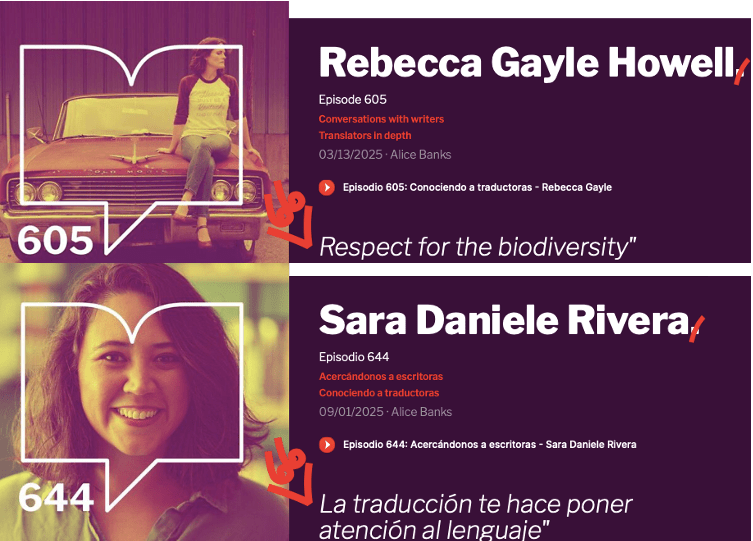
Interviews with writers and translators for the Hablemos, escritoras podcast
In my collaboration with Hablemos, escritoras, I have recorded interviews with writers and translators working with Spanish and Latin American literature.
TRANSLATION OF INTERVIEWS…
Hablemos, escritoras interviews in Latin American Literature Today
A selection of Hablemos, escritoras interviews I have translated into English are available to read on the Latin American Literature Today website:
Interview with Gabriela Wiener
More interviews are available to read in English and Spanish on the Hablemos, escritoras website.
ANTHOLOGY…
An Island of Stories: An Anthology to Travel through Gran Canaria is a short story collection published by the Biblioteca Insular de Gran Canaria. The project was brought together in the silence of lockdown, woven patiently in the following months and finally, sewn into the folds of the book through the eyes, bodies and voices of renowned artists from the island. All push the limits and boundaries of their own knowledge through this map of stories.
‘I was the happiest girl in the world‘, by Paula I. Nogales Romero, translated from Spanish by Alice Banks
‘Kain with a C‘, by Alicia Llarena, translated from Spanish by Alice Banks

REVIEWS AND FEATURE ARTICLES…
Contributions to the translation journal, Asymptote
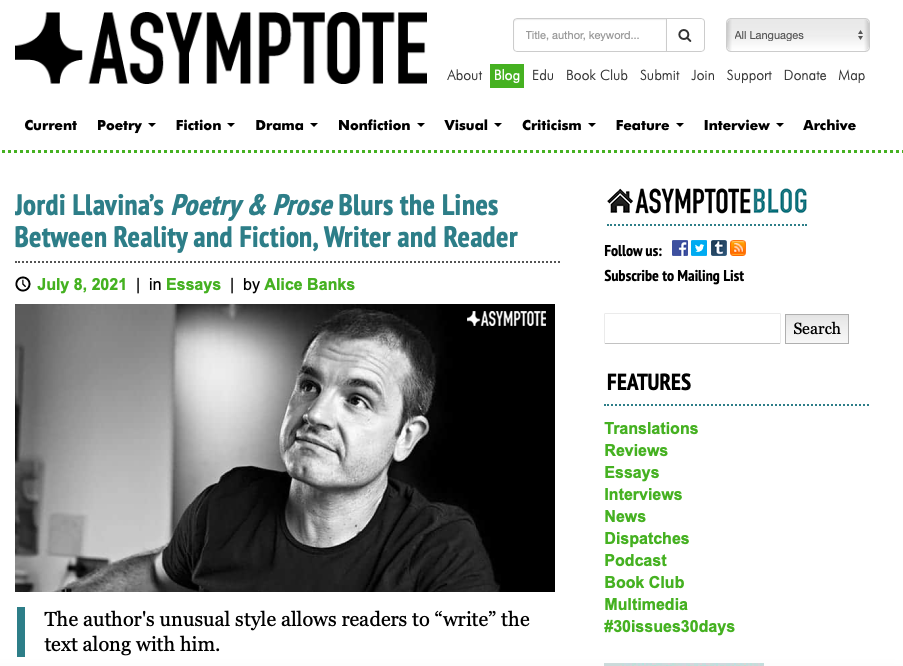
Poetry & Prose, by Jordi Llavina, translated from Catalan by William Hamilton, is a stunning collection of, as the title suggests, poetry and prose. The book opens with one astounding long-form poem—its English translation parallel to the original Catalan—and ends with an equally beautiful short prose piece. Themes of memory, time, and nature are prevalent in both, and Llavina’s lyricism flows effortlessly throughout the whole collection. Poetry & Prose—as well as the only other publication of Llavina’s work in English, London Under Snow—makes clear that this award-winning writer is an expert at blurring the lines between reality and fiction, and bringing reader and writer closer together than ever…
Read more here.
REVIEW: WHAT’S NEW IN TRANSLATION REVIEW, Zabor or the Psalms, by Kamel Daoud, tr. Emma Ramadan
Zabor, or the Psalms is an exhilarating novel, a saga, a journey through literature, language, and postcolonialism. As the spiraling and lyrical prose proceeds, it becomes clear that Kamel Daoud did not intend for this novel to be straightforward. Daoud—in Ramadan’s exquisite translation—makes the reader work, immersing them deep into Zabor’s plagued mind and troubled thoughts on language, literature, and his gift. I can only imagine the huge challenge that Ramadan has conquered in translating this incredibly lyrical prose that jumps back and forth between times, flits between thoughts, and sits upon layers and layers of metaphor. Her translation is impeccable, allowing the reader to easily immerse themselves into Zabor’s strange world. The text explores themes of rejection, abandonment, isolation, and death, but most importantly, Daoud subtly unpicks the power of language and literature in a postcolonial setting, presenting these charged topics through the lens of filial piety…
Read more here.
 Alice Banks